
In this guide
Your first paid collaboration can arrive long before content becomes your full-time job. If you trade as an individual, check your total trading income for the tax year before deciding whether to register with HMRC.
Check the £1,000 figure before expenses
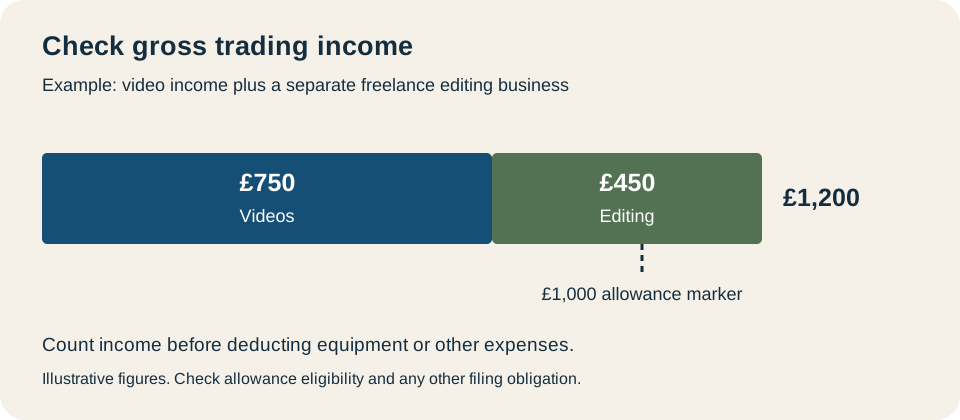
The trading allowance is up to £1,000 a year, subject to eligibility. The registration test uses gross trading income, before expenses. Add your trading activities together; a YouTube channel and a separate freelance editing business do not each get their own allowance.
For example, £750 from videos plus £450 from editing gives £1,200 of gross trading income. Spending £500 on equipment does not bring the registration test down to £700.
Gifts and services received for promoting products can count as income too. Keep the agreement and a record of their value alongside cash payments.
If income is £1,000 or less, check the allowance conditions and any other reason you need a return. If HMRC has already asked you to file, do not simply ignore the notice.
Register for the right tax year
Registering as a sole trader means registering for Self Assessment. Use HMRC's registration service and give the date you started trading. Someone already filing for another reason should still follow the sole-trader registration steps.
For a new obligation, the usual notification deadline is 5 October after the tax year ends. These examples assume normal deadlines and online filing:
| First tax year with a registration obligation | Tell HMRC by | Online return and balancing payment normally due |
|---|---|---|
| 6 April 2025 to 5 April 2026 | 5 October 2026 | 31 January 2027 |
| 6 April 2026 to 5 April 2027 | 5 October 2027 | 31 January 2028 |
If you needed to register for 2025/26 and have missed 5 October, register promptly. A late notification can carry a penalty. Do not wait for the next tax year.
Start a simple income record
Save monthly platform statements, brand invoices and payment records. Include your other trading work and keep gifts in a separate column so they are visible when you calculate income. Match statements to the UK tax year, which runs from 6 April to 5 April; some platforms report by calendar year.
Registration and the amount of tax due are separate questions. Your profit, other income and available reliefs affect the bill. Our Self Assessment records checklist covers the documents to prepare; Self Assessment support can help with an agreed filing scope.