In this guide
Employment Allowance can reduce an eligible employer’s Class 1 National Insurance bill by up to £10,500 in a tax year. It is a payroll saving, not a grant: it reduces employer NI due to HMRC, and the amount you save depends on your actual eligible liability.
What could it save?
For 2026/27, an eligible employer can use the allowance against its employer Class 1 NI. The examples below assume the figures are the business’s annual eligible employer NI liability before the allowance, and that it meets the rules.
| Annual employer Class 1 NI before allowance | Allowance used | Employer NI left to pay | Reduction in NI bill |
|---|---|---|---|
| £6,000 | £6,000 | £0 | £6,000 |
| £12,000 | £10,500 | £1,500 | £10,500 |
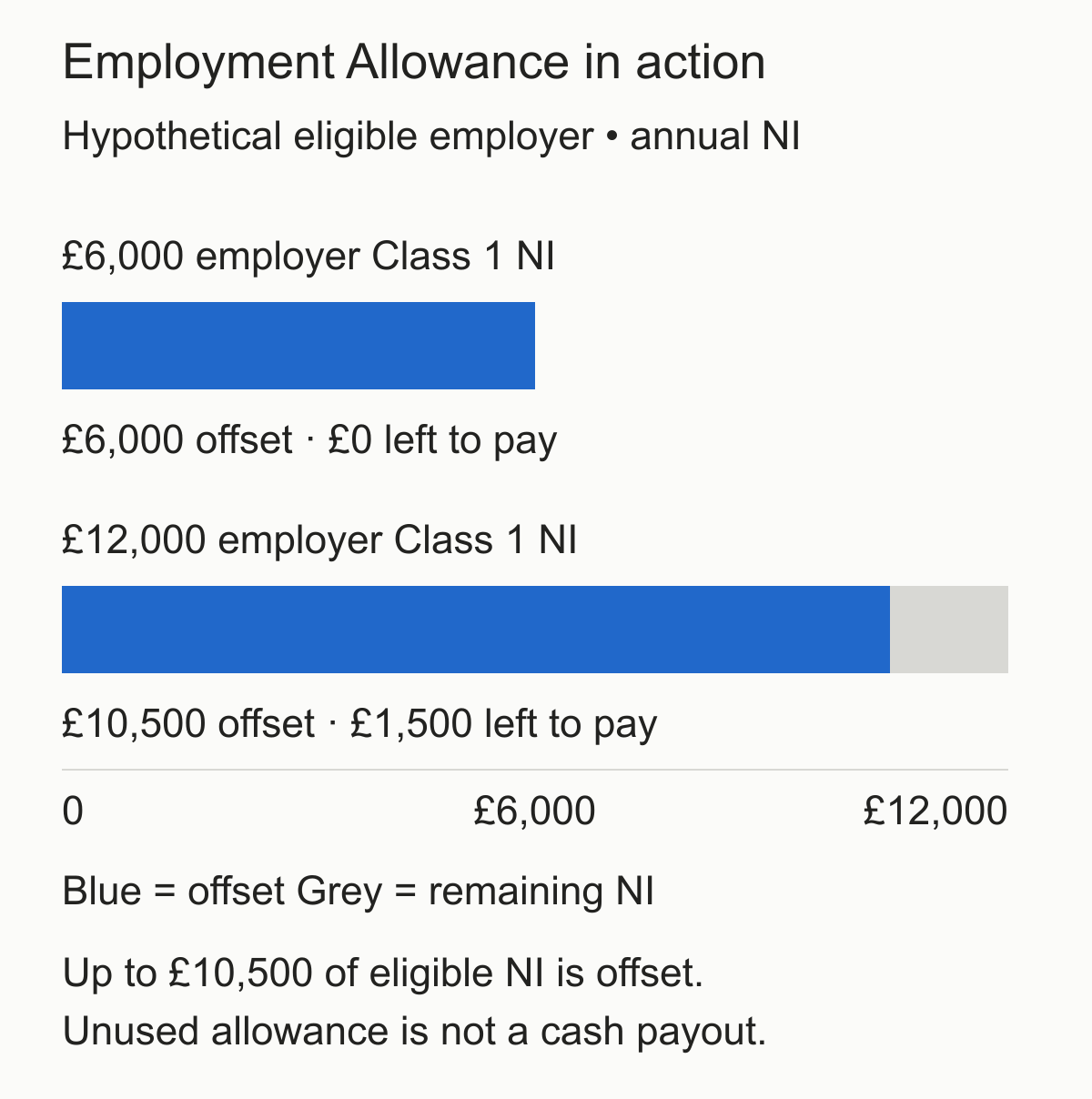
The allowance cannot reduce the bill below £0 or create a refund for the unused difference. If your eligible liability is £6,000, for example, the remaining £4,500 of the headline allowance is not an extra payment to the company.
Check eligibility before claiming
Most businesses and public bodies can claim if they do less than half their work in the public sector. Charities and employers of care or support workers may also qualify. Only one company in a connected group can claim, and an employer with several PAYE schemes can use the allowance against only one.
A common exception catches small companies: if a limited company has one director and that director is its only employee liable for secondary Class 1 NI, it cannot claim. Having other employees on payroll does not by itself change this; the additional employee must also be paid above the relevant Secondary Threshold. A sole trader is not excluded by this company-specific rule, though other eligibility conditions still apply.
How to claim
Claim each tax year through payroll. In your payroll software, mark the Employment Allowance indicator as “Yes” on an Employer Payment Summary (EPS) sent to HMRC. You can claim during the year, but claiming early lets the reduction apply sooner. Check your HMRC account afterwards to see the claim and balance.
If you missed a previous year, HMRC allows claims for up to four previous tax years, subject to that year’s rules. Make a separate claim for each year. Eligibility limits have changed, so do not assume today’s rules apply retrospectively. Review your director and employee positions, connected companies and employer NI records before submitting.
HMRC: Employment Allowance eligibility and claims
See also our PAYE and payroll guide and payroll year-end checklist. Swift’s Payroll and Pensions service can discuss payroll support within an agreed scope.
Need help running payroll?
Run payroll and agreed pension tasks to a set timetable, with employee changes and approvals tracked each pay period. We agree the scope and fee before work starts.
Discuss your payroll