In this guide
If your first Self Assessment bill is £3,000, the amount due in January could be £4,500. Payments on account can add an advance towards the next tax year to the bill you have just calculated.
For a creator whose income has grown quickly, budgeting only for the completed year's tax can leave a cash gap.
A first-year payment timeline
Assume your 2025/26 Income Tax and Class 4 NI liability relevant to payments on account is £3,000. No payments on account have been made, neither exemption below applies, and there are no other amounts due.
| Due date | Payment | Amount |
|---|---|---|
| 31 January 2027 | Full 2025/26 bill | £3,000 |
| 31 January 2027 | First payment towards 2026/27 | £1,500 |
| 31 July 2027 | Second payment towards 2026/27 | £1,500 |
January needs £4,500; another £1,500 follows in July. The advances are credited against the next year's liability. If that liability is higher, a balancing payment follows; if lower, there can be an overpayment.
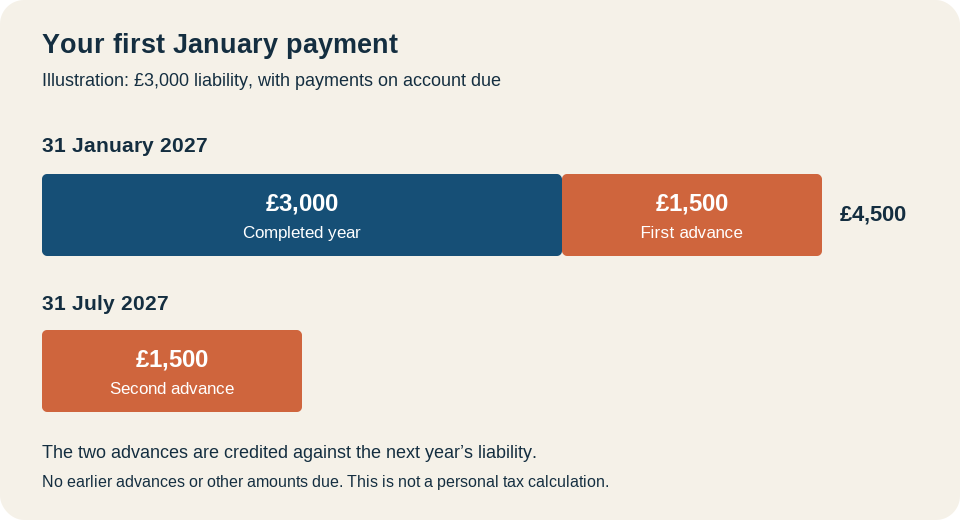
The £3,000 is an assumed liability, not a tax calculation for a stated level of creator income. Student loan repayments and Capital Gains Tax are excluded from this example and need separate budgeting where relevant.
Check whether advances apply
You usually avoid payments on account if the previous year's relevant bill was below £1,000, or more than 80% of your tax was paid outside Self Assessment, such as through PAYE. Having a day job does not automatically meet that test. Check HMRC's calculation and statement.
If you reasonably expect a lower liability next year, you can apply to reduce payments on account. Reducing them too far can produce interest on the shortfall; use a forecast you can support.
Build the reserve from profit
Update an estimate when a large campaign lands or platform income changes. Include other taxable income and reliefs, then separate the completed-year bill from the next advances. A fixed percentage of every payout can be a useful saving habit, but it needs checking against the estimate.
For the example, if you have £1,500 saved and six months left to fund January's £4,500 payment, the remaining £3,000 needs £500 a month. July still needs its own reserve. This is a cash plan, not an additional tax charge.
Prepare the return early enough to see the liability before spending a large payout. Use our Self Assessment records checklist to assemble the figures, or discuss filing support through Self Assessment.
Sources
Need help with your tax return?
Prepare your Self Assessment return from the income, expenses and other details relevant to your tax year. We agree the scope and fee before work starts.
Discuss your tax return