
In this guide
If sickness has left a gap in your payslip, ask payroll which days and earnings it used to calculate Statutory Sick Pay (SSP). A weekly rate alone will not explain a payment for only part of a working week.
Check the current rate and your working days
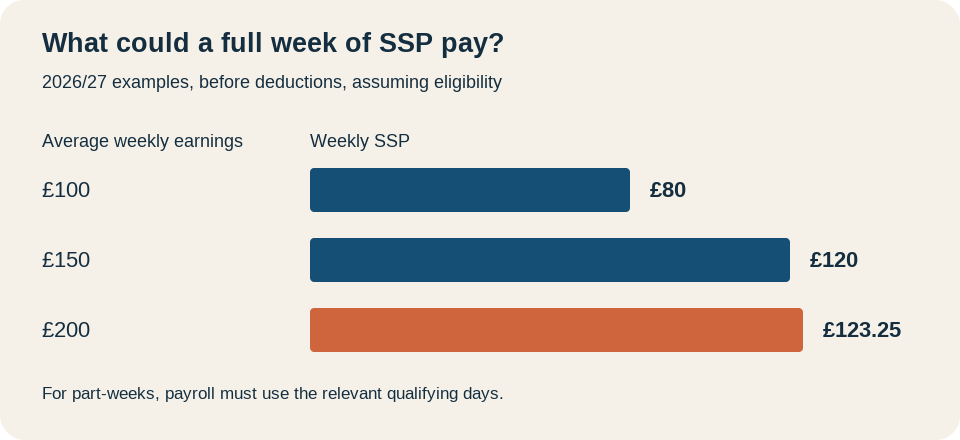
For 2026/27, eligible employees get the lower of £123.25 a week or 80% of average weekly earnings, for up to 28 weeks. SSP is paid through your employer and is subject to normal payroll deductions where applicable.
| Average weekly earnings | 80% of earnings | Weekly SSP before deductions |
|---|---|---|
| £100 | £80 | £80 |
| £150 | £120 | £120 |
| £200 | £160 | £123.25 |
These examples assume a full qualifying week and no other adjustment. For part of a week, check your normal working or qualifying days with payroll. The earnings figure uses the relevant averaging period, not simply the most recent bank deposit.
From 6 April 2026, eligible employees can receive SSP from the first full day of sickness. The old minimum earnings threshold was removed. If an employer refuses solely because your pay is below the old threshold, ask it to check the current rules. Absences spanning the April change can require transitional checks.
Give notice and keep the evidence
You must be classed as an employee, have done some work for the employer and meet the sickness conditions. Agency staff can also qualify. Some exclusions apply, including having exhausted your entitlement; use the official eligibility check if your circumstances are unusual.
Tell your employer by its sickness-reporting deadline, or within seven days if it has not set one. You normally need a fit note after more than seven consecutive days off, including non-working days. Keep the notification, sickness dates and any evidence supplied.
Check your contract for occupational sick pay as well. Your contractual entitlement may exceed SSP; ask payroll how the two appear in your pay.
Ask for a written explanation
Send payroll your absence dates and ask for the average earnings, qualifying days, daily calculation and reason for any refusal. Save the payslip and reply so you can identify the disputed amount.
If you do not qualify, your employer must provide form SSP1 within seven days of the first day off sick. The form can support a claim for other benefits; it does not itself award them. If talking to your employer does not resolve an SSP decision or amount, contact HMRC's Statutory Payment Disputes Team through the official claim page below.
Employers can use our SSP payroll guide for processing context and Payroll and Pensions service for agreed payroll support.
Sources
Need help running payroll?
Run payroll and agreed pension tasks to a set timetable, with employee changes and approvals tracked each pay period. We agree the scope and fee before work starts.
Discuss your payroll